

Owning your own yacht means you’ve got the unparalleled freedom to go wherever you want, whenever you want. But it’s not all sunsets and cocktails. Yacht maintenance is the central part of the responsibilities of being a yacht owner, and you ignore it at your peril. Whether you’re sailing on one of the latest exclusive yachts from a major shipyard or dabbling in the used yachts market, maintenance keeps you safe on the open water. But where do you start, and how often should you be performing certain tasks? In this guide, we provide your yacht maintenance checklist to show you what you need to be looking at to keep yourself and your guests safe at sea.

Why Yacht Maintenance is Essential
The benefits of boat maintenance don’t just extend to keeping you safe but also ensuring that your yacht looks its best. Yes, nobody cheers at the idea of maintenance, but it’s all part of being a responsible boatowner.
So, what are the advantages of staying on top of your boat maintenance checklist?
· Safety – Anything can happen at sea. Regular maintenance ensures all essential systems are working as they should. The last thing you want is to find out your navigation system is broken when you’re in the middle of the sea.
· Save Money – Preventive maintenance catches problems earlier and stops them from occurring in the first place. Early correction prevents minor issues from becoming major repair jobs later, potentially saving you thousands of pounds over the lifespan of your sailing career.
· Increase Longevity – Consistent care extends the lifespan of not just your vessel but the components within. Whether it’s the hull, generators, or engines, regular maintenance ensures you get as many years as possible from your boat.
· More Efficiency and Reliability – Well-maintained yachts simply work better for longer. This preserves metrics like fuel consumption, speed, and performance as a whole. Not only does this add up to a better sailing experience, but it also minimises your downtime.
· Resale Value – Used yachts always sell better when they’ve been properly taken care of by their original owner. You can always command a higher resale value when you can prove that you’ve committed to a regime of tender loving care.
In short, the only downside to maintenance is having to do it in the first place. However, regular checks are a ritual that ultimately pays off in terms of safety, enjoyment, and the money in your wallet.
Daily Yacht Maintenance Checklist
Setting sail doesn’t mean starting up the engines and pulling away from the quay. Before going out on any voyage, regardless of how short, there are certain checks you should follow. Here’s your daily checklist that should have you out on the water within an hour.
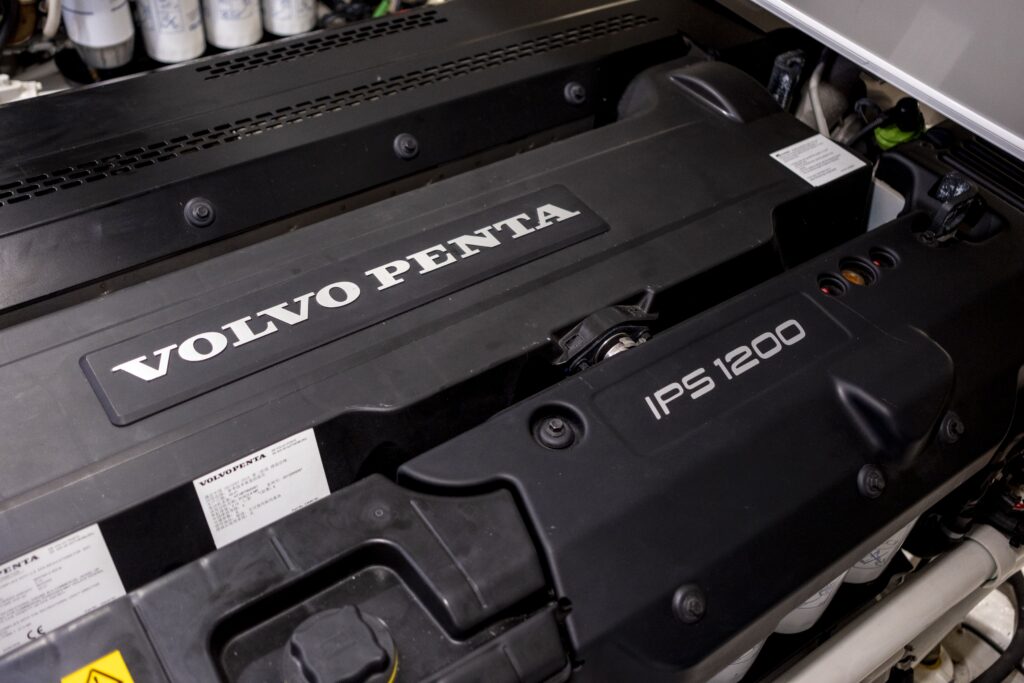
Engine
- Check the engine room to ensure everything is in order.
- Look at the levels of your transmission fluid, engine oil, antifreeze, and coolant.
- Inspect the pulleys, belt tension, and alignment. Your belt shouldn’t be too slack or too tight, and everything should be in alignment.
- Check your water pump belts for tightness and ensure your alternator is providing the correct amount of voltage.
Safety
- Ensure you have enough flotation devices for everyone onboard.
- See if you have a first aid kit, that it’s accessible, and that it’s fully stocked.
- Check how many flares you have in case you get into trouble.
Monthly Yacht Maintenance Checklist
Daily checks are designed for those last-minute essentials before setting sail. However, your obligations don’t stop there. Here’s a breakdown of the expanded tasks you should be performing at least once a month to keep your vessel sea-ready.
Engine
- Change your engine oil and filter.
- Clean the thru-hull and check where any paint has come away. Note that if your thru-hull’s metal has turned pink, it’s a sign that you’ll have to replace it.
- Clean up the syphon break to support it in filtering raw cooling water.
- Inspect your heat exchanger anodes. If more than half of it is gone, you’ll need to replace it.
Hull
- Check your hull, keel, and rudder for any signs of damage.
- Look for any rust or scratches along the body.
- Walk along the deck to confirm the coating is still intact and that the underlying wood is undamaged.
Electronics
- Test your battery to ensure it’s working correctly.
- Check all wiring connections. They should be neat, tidy, and with the casings still intact. If there are any wet wires or ones that could become exposed to water, repair the problem immediately.
- Check the fuses to make sure they’re still all okay.
Rigging and Sails
- On sailing yachts, you should check your sails for any mould or damage.
- Inspect the mainsail for any signs of wear and tear.
- Confirm that the shroud and cotter pins are all in good condition.
Yearly Yacht Maintenance Checklist
Your annual checks will very much look like your monthly checks. Generally, this is when you’ll be deep-cleaning your yacht. Many skippers choose to perform these checks after they’ve pulled their boats out of winter storage for the season ahead.
Engine
· Test the batteries and make sure they’re performing as expected.
· See if there’s any damage to the fuel tank. If there is, check that your fuel hasn’t become contaminated with water.
· Look at the bodywork to see if there’s any damage. In the event of damage, it means your engine may not be properly insulated.
Rigging and Sails
The only annual check for the rigging and sails is to take them down and deep-clean them. An annual deep clean lowers the risk of mould from developing throughout the year. Many captains choose to expand this deep clean to the rest of their vessels to enable them to look their best, but this is an added extra, rather than one of the essential checks.
How Much Does Yacht Maintenance Cost Each Year?
Yacht maintenance costs will vary based on a range of factors, but what can you expect to spend? The general rule of thumb is to set aside 10-15% of the yacht’s purchase price every year for maintenance. Larger vessels, including superyachts, could see your costs rise much higher.
The factors that influence how much you pay include:
· Size – The bigger the yacht, the more you can expect to spend on maintenance. These vessels tend to have higher fuel consumption rates, more complex systems, and larger crews to manage.
· Age – Just like your car, older used yachts will see more problems as components wear out. Expect more frequent and expensive repairs, as more parts need to be replaced rather than repaired.
· Location – Not all ports and marinas were created equal. The costs of parts, labour, and other fees can vary depending on where you’re based.
· Usage – Yachts that are regularly used for long-distance cruising, such as if you’re running a charter operation, consume more fuel and experience more wear and tear. If you’re out on the water every weekend, as opposed to a few times a year, expect to spend more on maintenance.
There’s a reason why some skippers claim that buying exclusive yachts is less of an investment and more like an expense. It’s also why it’s strongly recommended that you consider the ongoing costs of yacht ownership compared to chartering a yacht for your trips.
How to Lower the Costs of Boat Maintenance
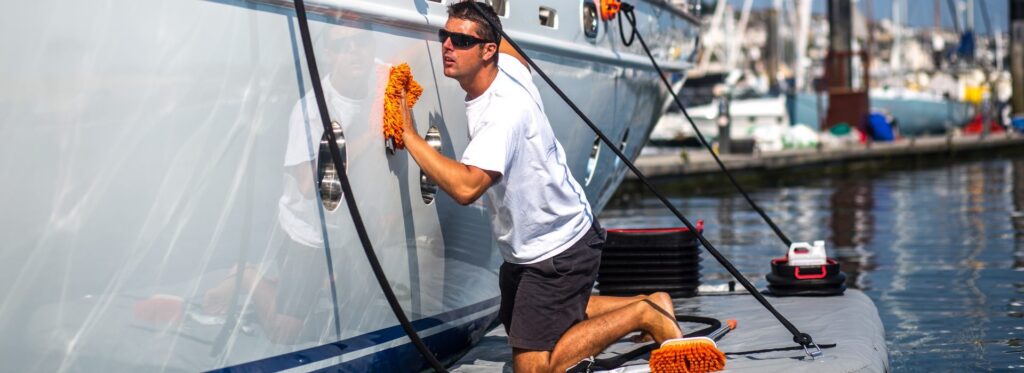
The good news is that you can lower the costs of boat maintenance. Firstly, if you commit to a regular checklist and stick to it, you’ll lower your costs by reducing the number of major repairs in exchange for smaller ones.
You can also shop around for the best deals on skilled professionals. In some cases, this may even include going to a different country’s port, if the option is available. That’s also why some marinas and ports are more popular than others, since your running costs are lower.
The problem is that sooner or later, you’re going to have a major repair or replacement job on your hands. Some skippers even learn how to carry out repairs themselves to lower their costs further, but this takes time and should only be done via a certified course. Don’t attempt to poke around the innards of your yacht if you’re a novice, or you could end up doing more harm than good.
Final Thoughts
Boat maintenance is a natural consequence of owning your own boat. However, with regular checks spaced throughout the year, you’ll catch problems earlier and guarantee that your vessel is fighting fit and ready to take to the water.
How do you ensure your boat is properly maintained?
Yacht Maintenance FAQs
What’s the most important piece of boat maintenance to check?
Engine oil level and condition are what you should be keeping a close eye on. Low or contaminated oil is about the fastest way to ruin an inboard, sterndrive, or outboard and lead to catastrophic failure.
What’s the most expensive thing to repair on a boat?
The engine is by far the most expensive thing to repair on a boat. It’s why so many maintenance checklists focus most of their checks on the boat’s engine.
What will happen if a boat is damaged?
Damage to your boat doesn’t mean you’re lost at sea, but it will cause a decrease in performance, increase fuel usage, and even compromise the boat’s stability, which increases the risk of capsizing and sinking.