

Are you new to sailing? Then you need to know the key nautical terms you’ll hear while in the middle of the ocean or tied up at the marina. Crucial marine and nautical terms don’t just show everyone you know what you’re talking about, but also allow you to act quickly in a pinch. In this guide, we’ll split the most important marine terms and nautical jargon into different categories to get you speaking (not swearing) like a sailor in record time.
The Main Sailing Terms You Need to Know
Sailing terms vary from place to place, but, like in aviation, some things always stay the same. Some form of standardization has always been necessary, so that everyone knows where they stand.
Here’s where to get started with nautical terms.
Boat Positions
- Aft – Towards the back of the boat.
- Amidships – Middle of the boat.
- Bow – Front of the boat.
- Centreline – The dividing line down the boat from bow to stern.
- Forward – Towards the front of the boat.
- Helm – Tiller or wheel to steer the boat.
- Port – Left side of the boat.
- Starboard – Right side of the boat.
- Stern – Back of the boat.
Boat Equipment
- Anchor – Heavy object dropped off the boat to hold it in place.
- Bilge Pump – Pump to remove water from the bottom of a boat.
- Depth Sounder – Device to measure water depth.
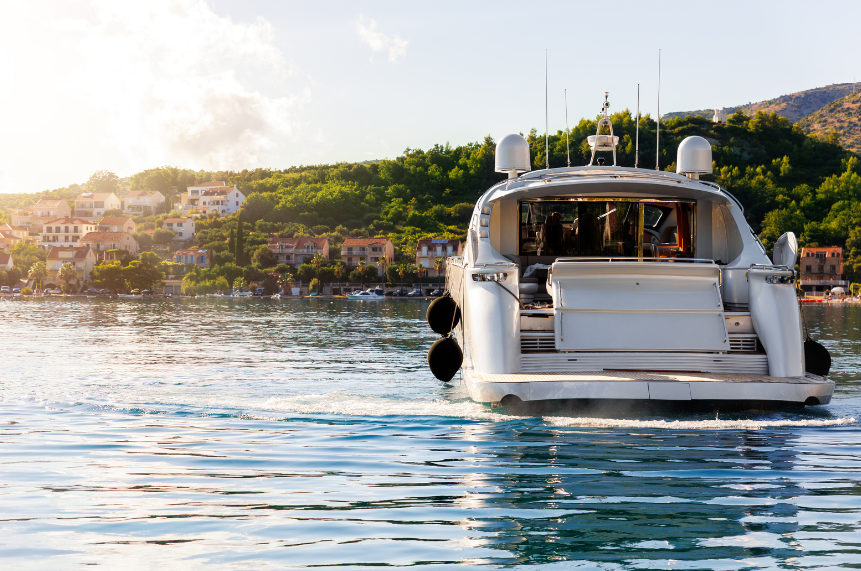
- Fenders – Cushions hung off the side of the boat to protect the hull.
- Flares – Emergency signaling device.
- GPS – Device to determine your location.
- Halyard – Rope to hoist and lower sales.
- Jib – Smaller sail at the front of a boat.
- Keel – Blade/fin on the bottom of boats to support stability.
- Lines – Ropes.
- Mainsail – The largest sail.
- Rudder – Installed beneath the boat to assist steering.
- VHF Radio – Radio for communicating with other boats and shore stations.
Sailing Positions and Movements
- Beam Reach – Sailing with the wind blowing into the side of the boat at a 90-degree angle.
- Broad Reach – Sailing with the wind blowing from behind the vessel.
- Close-Hauled – Sailing close to the wind.
- Gybing – Turning the stern through the wind.
- Heeling – When a sailboat leans over while sailing.
- Jibing – Turning the boat away from the wind.
- Leeward – The side of the boat furthest from where the wind is.
- Point of Sail – Your direction relative to the wind.
- Running – Sailing with the wind.
- Tacking – Moving the bow through the wind.
- Windward – The side of the boat closest to where the wind is.
Geographical Position
- International Date Line – A line that’s 180 degrees away from the prime meridian line, which is in Greenwich, UK.
- Latitude – Geographic coordinates measuring the distance north or south of the equator.
- Longitude – Geographic coordinates measuring the distance east or west of the prime meridian line that runs through Greenwich.
- Nautical Mile – Sailing unit of measurement that amounts to a single minute of latitude.
Weather
- Apparent Wind – Speed and direction of the wind, as measured by a wind instrument on a moving boat.
- Barometer – A device to measure atmospheric pressure.
- Forecast – The weather forecast in a particular area.
- High Pressure – Fair weather and sinking air.
- Low Pressure – Unstable weather and rising air.
- Port Tack – When the wind blows from the port side.
- Pressure – Force exerted by atmospheric pressure.
- Starboard Tack – When the wind blows from the starboard side.
- Trade Winds – Steady winds coming toward the equator.
Sailing Knots
- Bowline – A knot that forms a fixed loop tied at the end of a rope.
- Cleat Hitch – A knot to tie a rope to a cleat.
- Clove Hitch – A knot to tie a rope to a pole.
- Figure Eight – A knot for a rope already around another object.
- Half–Hitch – Overhand knot to tie a rope to a fixed object.
Why Do Nautical Terms Matter?
Why does it matter if you say nautical miles instead of miles? Does it make a difference if someone says starboard side or the right side?
It might seem like an archaic tradition or a cultural thing, but the truth is that marine and nautical terms can save lives by preventing confusion at sea. They add a level of clarity that nobody can misunderstand.
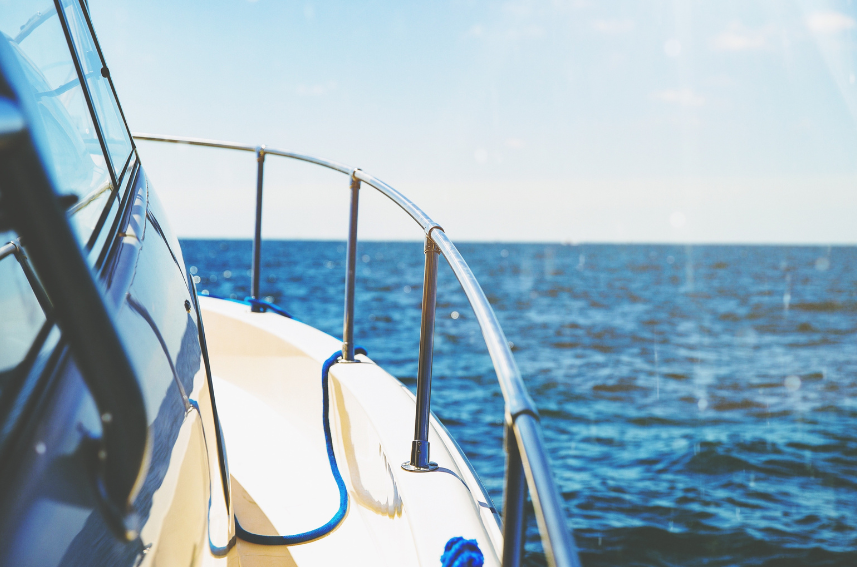
For example, if someone says the right side of the boat, it depends on where they’re standing at the time. Starboard always means the right side while facing the bow, no matter where you are. Getting this wrong in an emergency could mean the vessel is damaged or lives are lost.
It also breaks through language barriers in the same way as aviation terms are being standardised. Any accomplished sailor, whether they’re from Spain or the Philippines, will know standard marine terms and nautical jargon even when they don’t use the same language in everyday conversation.
Of course, there are aspects of nautical jargon that you might hear from port to port around the world that aren’t part of the standardisation. Again, this is normal, but these words won’t be used for any of the critical aspects of crewing a boat.
Conclusion: Know Your Sailing Jargon
Learning about the key terms you’ll hear on a boat is part of becoming part of a crew or owning your own boat for the first time. It might seem like a traditional rite of passage, but it’s all part of ensuring the highest standards of safety wherever you are in the world.
What’s your favorite piece of sailing jargon?
Marine and Nautical Terms FAQs
What are nautical terms?
Nautical vocabulary is used in maritime navigation and sailing to describe everything from the direction you’re going to different sailing techniques to parts of the vessel. You can’t sail effectively or safely without knowing them.
What’s the difference between a mile and a nautical mile?
A nautical mile represents one minute of latitude. In straightforward terms, a single nautical mile equals 1.1508 land miles. They may sound similar, but the difference can amount to hundreds of miles on long voyages.
Do I need to know nautical terms to sail?
Yes, you do. The basic terms of sailing are critical to guaranteeing clear communication and teamwork on board. Ultimately, knowing the language of sailing is a safety issue that could translate into saving lives in an emergency.