

Key Takeaways
- Yachts vs. superyachts differ primarily in size, with superyachts starting at 80-100 feet and featuring luxury amenities.
- Yachts typically offer simpler ownership and crew arrangements, while superyachts provide bespoke hospitality with professional crews.
- Superyachts involve more complex regulations, offering extensive operational capabilities compared to standard yachts.
- The cost of ownership significantly varies, as superyachts require full-time crews and specialized maintenance services.
- Misconceptions exist, such as the belief that size alone defines a superyacht; quality of service and design also matter.
Estimated reading time: 8 minutes
Hang around your nearest marina long enough, and you’ll probably hear about those exclusive yachts known as superyachts at some point. You might have even seen one of these luxury yachts cruising by, but is the only difference down to size? Size is a defining factor when comparing yachts vs. superyachts, but it’s not the only thing that marks them out. Whether you’re looking to charter superyachts or you’re just curious, let’s break down the top five differences between these vessels.
What is a Yacht?
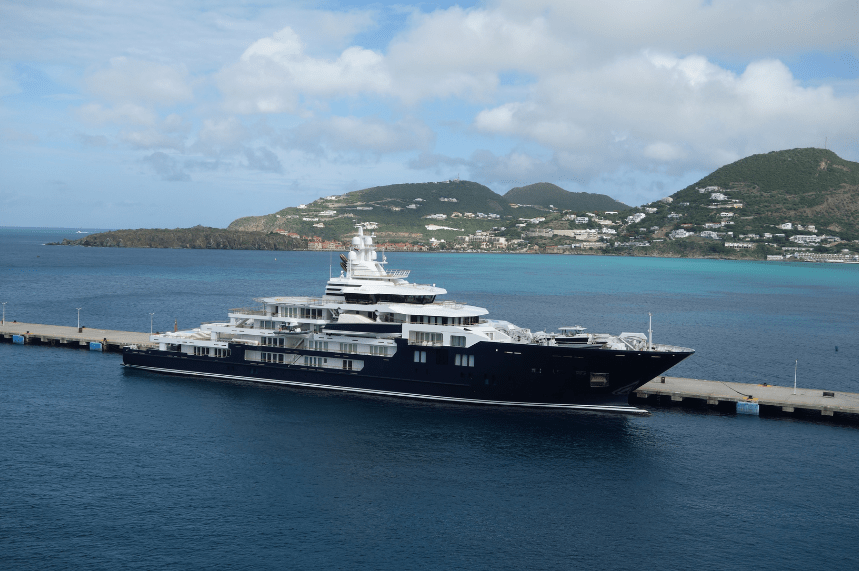
Yachts are vessels designed for personal leisure, whether that’s travel, cruising, or entertaining guests. The yacht class encompasses a range of styles and sizes, including:
- 33-60 Feet – Coastal cruisers and weekenders with simple systems, compact galleys, and no more than one or two cabins.
- 60–100 Feet – Mid-size yachts typically feature crew cabins, limited offshore capability, and multiple staterooms.
- 100 Feet – Yachts of this size tend to overlap the world of superyachts, especially if crews and amenities scale accordingly. This is where you might see some debate over whether a vessel is still a yacht at this stage.
The term “yacht” is a highly general term covering most of the vessels you’ll see in your marina. They’re usually either owner-operated or lightly crewed with relatively straightforward logistics. If you’re starting for the first time, the chances are these boats will be your first choice.
What is a Superyacht?
Within the industry, a superyacht starts at 80 to 100 feet and can go on forever. Length alone isn’t what defines whether a vessel is a superyacht, though. On the contrary, if you rent superyachts, it’s all about the combination of:
- Hotel-style services
- Professional crew
- Complex systems
- Regulatory frameworks
- Custom build quality
- Operational infrastructure
The simplest way to view a superyacht is like a floating hotel. It’s the ultimate in luxury hospitality on the ocean waves, short of buying your own cruise ship. If you’re looking for a resort-grade holiday at sea, these luxury yachts are what you’ll be looking at.
Yachts vs. Superyachts: Top Five Differences
Comparing yachts vs. superyachts isn’t purely about length, even though this is what the majority look at when deciding whether a boat makes the grade. Other differences also come to the fore.
Here are the five key differences that mark out these exclusive yachts from everything else you’re likely to come across.
1. Size and Volume
Length is the first aspect you’ll look at. More feet means more deck space and cabins. Superyachts by industry convention begin at around 80 feet, but once you’re above the 100-foot range, it’s hard to call what you’re looking at a yacht.
However, length is only half the story. Yachts aren’t constrained by their length but by their volume. Using volume is how you determine how roomy the interior feels, available operational systems, and the amount of storage you have.
Superyachts excel when it comes to volume, which is why these boats might have multiple entrances, guest decks, and exclusive crew areas. In other words, more volume means more livable space and greater guest capacity.
2. Crew and Culture
Most yachts tend to be owner-operated with little to no crew. Only when you start reaching the 60 to 80-foot range do you start to see a separate captain or a deckhand. Even then, it’s not strictly necessary, but many owners tend to hire at least one extra body for added safety and convenience.
The culture on a yacht tends to differ. Even with a crew, service tends to be friendly and informal, with everybody pitching in. In contrast, superyachts deliver what’s known as bespoke hospitality.
These luxury yachts will have larger crews separated between operations and hospitality, with each member specializing in a particular role. Additionally, the culture tends to focus more on service, with every guest’s needs being met and no expectation of them sharing any of the load.
It’s the type of service ethos you’ll find in a boutique hotel.
3. Custom Design
The yachting world is dominated by production and semi-custom models. The advantages are a faster delivery speed and more predictable costs. Although upgrades like electronics and tender garages might be standard, hulls and general interior arrangements tend to be identical between models.
Buy or rent superyachts, and you’re now looking at bespoke design. Many superyachts begin with a semi-custom platform, but the majority of these boats are designed around the owner’s needs. If you’re purchasing one, you’ll usually work with interior designers and naval architects to craft the perfect seagoing vessel.
You’re shaping an entirely one-off environment that reflects how you want to live while sailing and your personality. Each vessel leaving the shipyard is a unique model, perfectly adapted to you.
4. Range and Regulations
Most yachts are constrained by range and usually have to adhere to far fewer regulations than superyachts. Coastal cruising is the most common type of trip a yacht will make, with owner-operators planning around marina availability, weather windows, and an array of local regulations.
Superyachts are essentially mobile hotels, capable of everything from coastal cruising to ocean crossings. They’ll almost certainly be sailing under a flag to lower their costs, and inspections and statutory surveys are the norm. Owners of these boats will usually have extra obligations, including proper crew certification and documented safety management systems.
It’s also why so many tend to charter superyachts instead of buying outright, because of the extra effort involved in the upkeep. But to many superyacht owners, the global mobility you can only get with a superyacht is worth the trade-off.
5. Cost of Ownership
Acquisition costs for a yacht will vary depending on the size and brand, but your annual upkeep costs are usually dominated by routine maintenance, storage, insurance, and fuel. If you’re using crew at all, the chances are they’re only working part-time or seasonally.
In terms of the cost of ownership for superyachts, the biggest expenses are yard time and crew. Crews may be full-time, and you’ll be spending not only on the technical side but also on the hospitality side. Additionally, they’ll likely be in uniform and will require galley provisioning and training.
Yard time is the other big factor. Superyachts need haul-outs and refits like any other vessel, but their size and volume mean they can only be properly cared for through specialized vendors and larger shipyards. Unlike ordinary yacht owners, superyacht owners typically pay commercial rates, which are a magnitude higher.
Common Misconceptions About Yachts vs. Superyachts
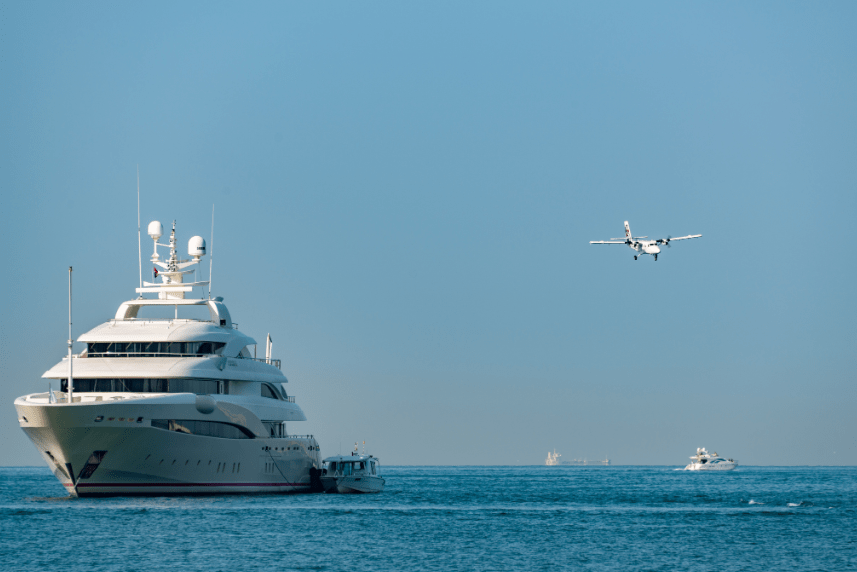
Yachts and superyachts can overlap on occasion, leading to some confusion among not just the uninitiated but even veteran sailors. The three biggest misconceptions you might have come across include:
1. Is a 90-Foot Boat Automatically a Superyacht? – The answer is no. Some 90-footers are little more than large family yachts, whereas others are fully crewed, bespoke, and operate with the luxury and standards of a hotel.
2. Does Sailing vs. Motor Matter? – Not at all. You’ll find both sailing superyachts and motor superyachts. It’s how they operate and run the hospitality side that matters.
3. If it’s a Charter, it’s a Superyacht – Among the most bizarre misconceptions is this one. Plenty of normal yachts offer charter services. What differentiates it when you charter superyachts is the custom environment, service level, and crew headcount.
You might be noticing a common thread that size is only a small part of the puzzle, and this is where the overlap happens. Generally, you want to focus on what’s on offer and how the vessel operates, rather than just the size.
Yachts vs. Superyachts: Final Thoughts
Yachts and superyachts offer an incredible sailing experience in the right hands. The difference is that a superyacht is a mobile hospitality environment. Expect effortless service, luxury living, and global range without the need to get your hands dirty or even to lift a finger at all.
If you’re interested in getting a better understanding of the differences between conventional boats and these exclusive yachts, charter superyachts and get a taste for what these giants of the sea bring to the table.
Yachts and Superyachts FAQs
Is there a strict size that makes a yacht a superyacht?
No, size is only one part of it. The most important factors are building standards, operation management, and hospitality standards. A genuine superyacht will have the same level of service as a bespoke hotel.
Is a superyacht the biggest type of yacht?
In theory, superyachts are the largest yacht class, but authorities and shipyards are expanding their definitions to account for larger ships. Examples include the mega-yacht, with a starting range of 200 feet, and the giga-yacht, with a starting range of 300 feet. Note that these boat sizes are exceptionally rare.
How long does it take to build a superyacht?
Superyacht availability is one of their drawbacks, as they are usually ordered and built from scratch. Expect a fully customized superyacht to take two to four years to build, with some vessels taking up to five years. A semi-custom superyacht may be faster, but it can still take anywhere from two to three years to finally get to take your new superyacht out onto the water.